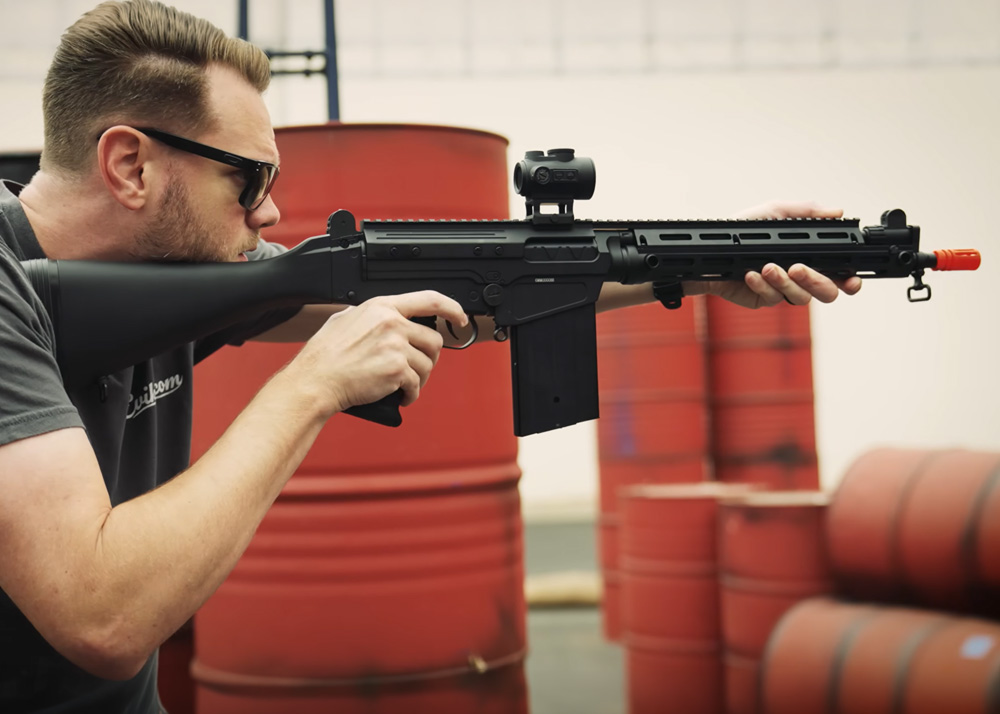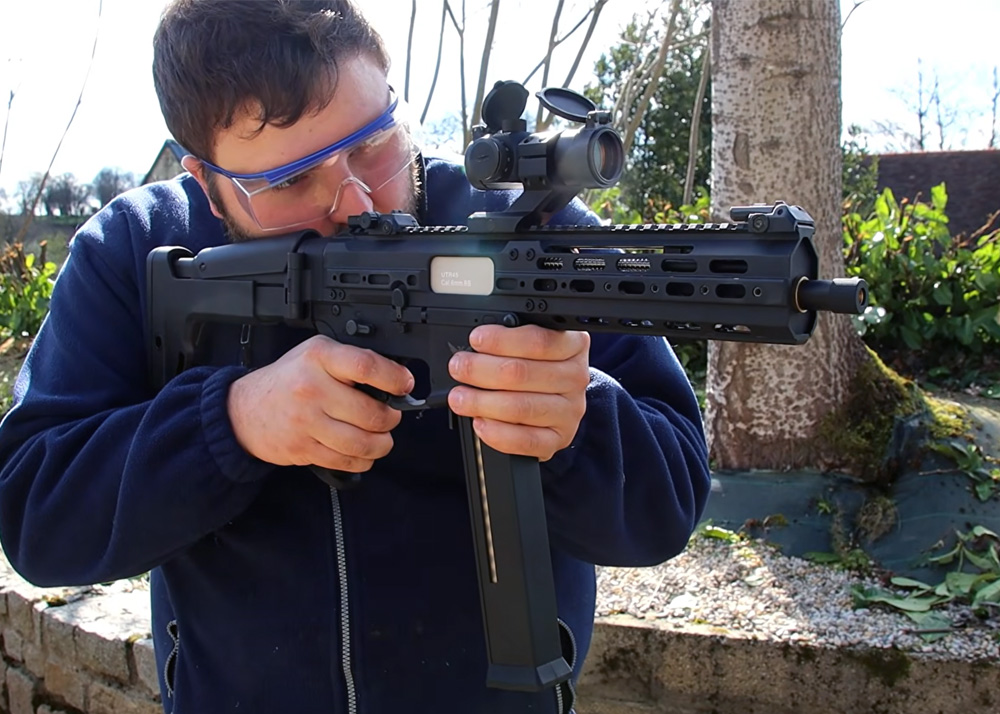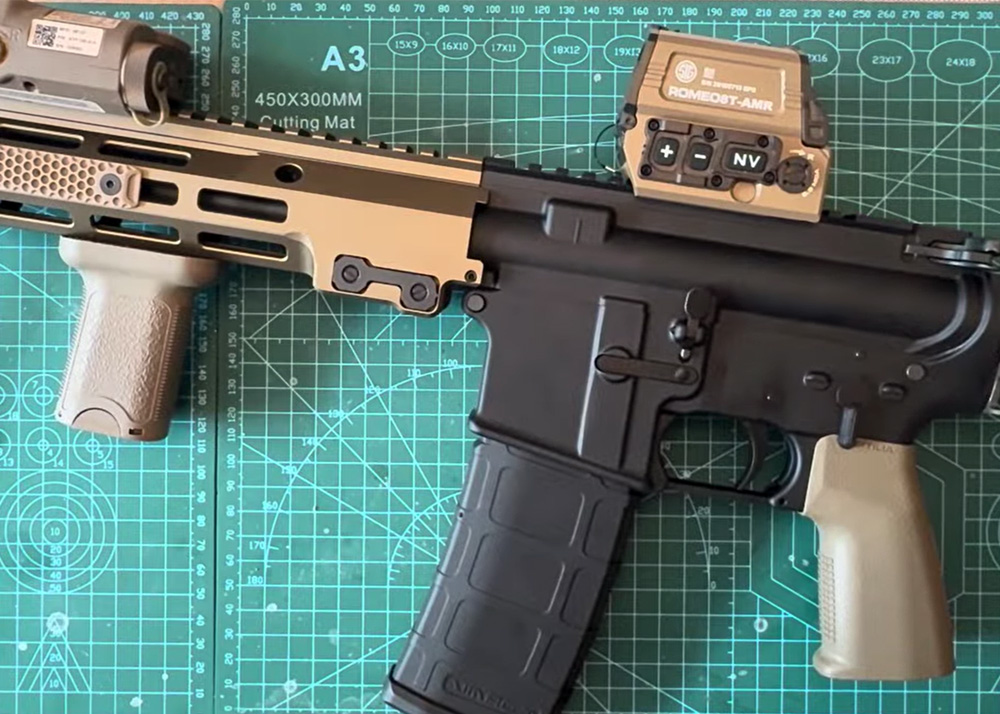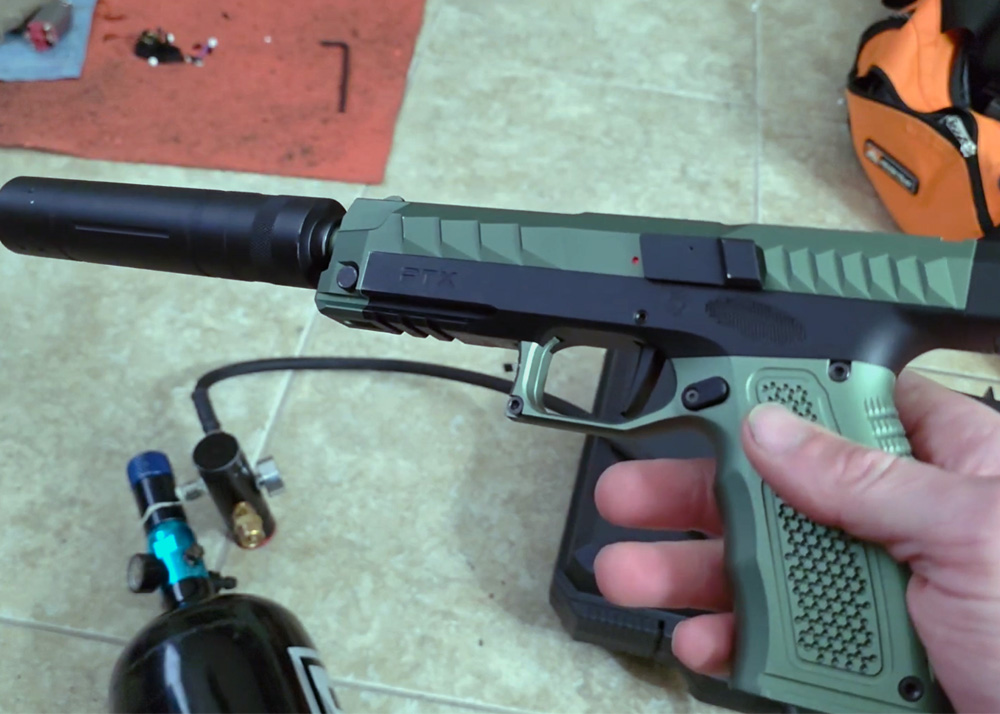
Sightmark has expanded its Presidio series with the new Presidio 1-10x26 SFP LPVO, a low-power variable optic built to cover both close-quarters and mid-range shooting in a single scope. The riflescope centers on a CRED-10 Fiber SFP reticle, which pairs a 3 MOA dot with a hybrid fiber-wire system lit by an LED. Sightmark says the setup produces a sharper reticle than standard LED illumination, with visibility that holds up in bright daylight and low light alike.
The Gear Locker does an unboxing and initial review of a replica Aimpoint 5000 optic, a highly sought-after item for enthusiasts building retro rifle clones. Given that original optics from this era are increasingly rare, expensive, and fragile, these new Chinese reproductions offer an alternative for display or airsoft use. He notes that the package arrives with several accessories, including lens covers, split vertical rings, an allen key, and an extension tube that functions as a sunshade.
Abe Munitions brings the Vector Optics Frenzy Flex Gen 2 to the range to check it out. This is a red dot sight designed for shooters who appreciate a clear view without having to squint through a tiny window. It features a side-loading battery tray, which is a relief for anyone who dislikes the chore of removing their optic and losing their zero just to swap out a battery.
Airsoft Lefty gets to check out the Evolution Gear EXPS3 Gen 2 holographic sight and magnifier combo from Clutch Precision, specifically geared toward gas blowback airsoft players. He admits to previously relying on "Kentucky windage"—just watching where the BBs fly—but finds that this setup actually helps hit targets at a distance without needing a degree in ballistics.
Cannon Flannel tries the 2026 upgraded version of its EXPS 3.0 if it is the best optic for airsoft use. The product is marketed as a high-end alternative to other brands in the airsoft market. The package includes the optic itself, a set of multi-cam black stickers for customization, and two different screen protectors: a honeycomb flash hider and a plexiglass shield to prevent damage from projectiles.
TARR Precision does a field test of two budget-friendly red dot optics purchased from Temu to see if they can survive more than a few minutes of actual use. He mounts a $20 "Fiachi" red dot on a 450 Bushmaster pistol and a $30 EOTech knockoff on a 12-gauge shotgun. After a baseline accuracy test at 12 yards, both setups are subjected to a durability stress test that involves repeatedly tossing the firearms onto the ground to see if the optics lose their zero or simply fall apart.
In this video by Evike.com, the advice before buying an airsoft optic, players must first determine if they actually need one. For close-quarter indoor games under 100 feet, standard red dots or relying on muscle memory work perfectly fine. However, outdoor fields require targeting assistance to help players actually hit what they are aiming at, rather than just decorating the scenery with plastic pellets.
This episode shows a casual and lighthearted discussion between two shooting enthusiasts at the BB Range 042 facility regarding the Red Win New Cobra CRO red dot sight. They engage in a playful debate about whether adding such an optic actually improves performance or if it's just a fancy accessory for those who have abandoned the way of the iron sight.
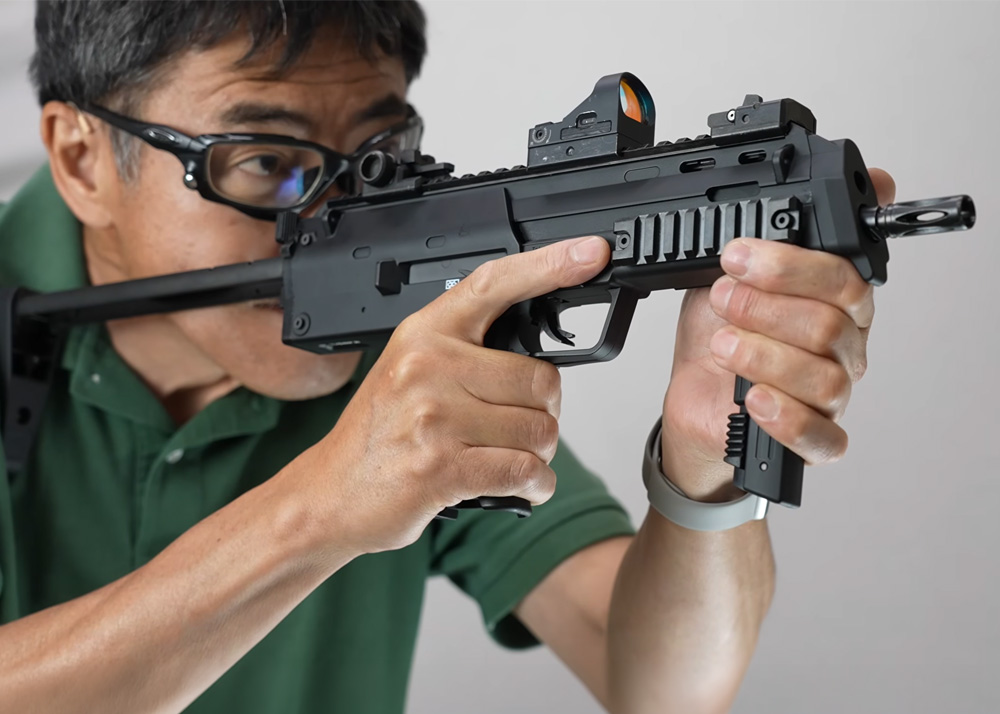
Korean airsoft YouTuber Ahjae TV checks out the Tokyo Marui Micro Pro Sight, a lightweight optical accessory designed primarily for airsoft enthusiasts who want to keep their setups nimble. Constructed almost entirely of plastic, this sight is a featherweight contender, coming in at just about 30 grams including its mount. This makes it a practical choice for gas blowback pistols with plastic slides, as it won't weigh down the action or turn your snappy sidearm into a sluggish paperweight.
Josh from Walkers discussing the age-old debate of how to best dress up an AR-15 for a day at the range or a theoretical emergency. He compares two primary setups: a Red Dot paired with a magnifier and a Low Power Variable Optic (LPVO). Both options offer a clear view of the world, but they cater to different philosophies of how much tube a shooter wants to stare through while trying to look cool.
The Latest News