Look Ma, No Gas! Tokyo Marui’s Gorgeous M1851 Navy Revolver
Azzkikr
13 Jun 2026
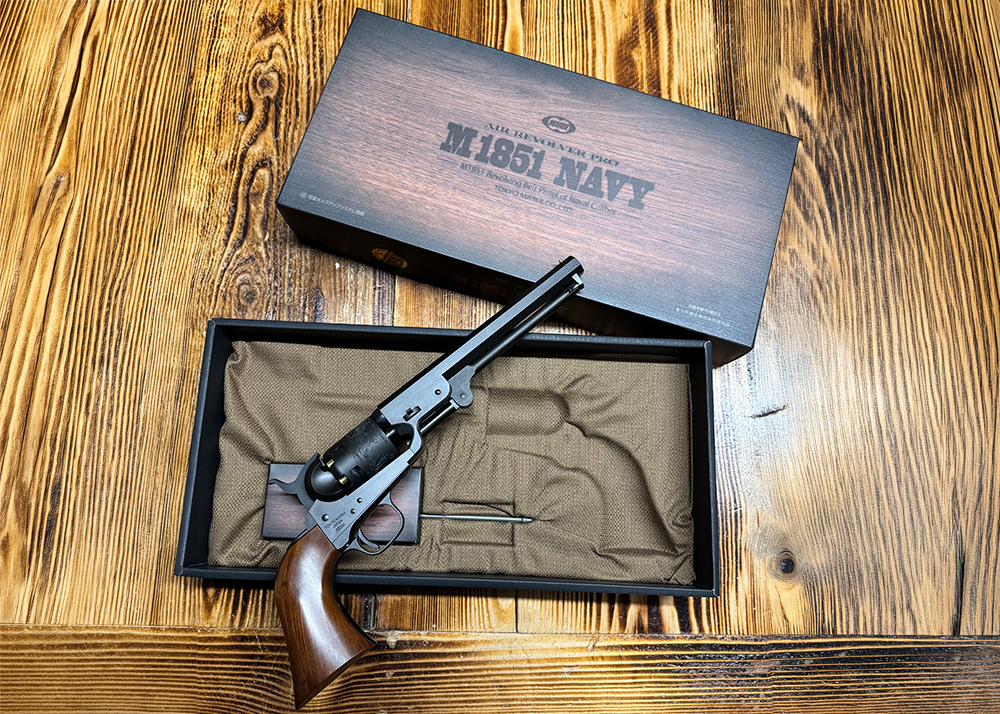
There are airsoft guns, and then there are airsoft guns that make you briefly wonder whether you've wandered onto a film set for a Western. The Tokyo Marui M1851 Navy belongs firmly in the second category. Originally retailing at ¥24,800 (excluding tax) in Japan when it was released, this is Tokyo Marui's recreation of Samuel Colt's percussion revolver. This is the same design that was standard issue for the United States Navy from 1851 and became one of the most recognisable handguns of the nineteenth century. Whether you're a history enthusiast, a dedicated collector, or simply someone who has always wanted to cock a hammer dramatically before taking a shot at a tin can, this is a product that knows exactly what it is. The question, as always, is whether that's what you want too.
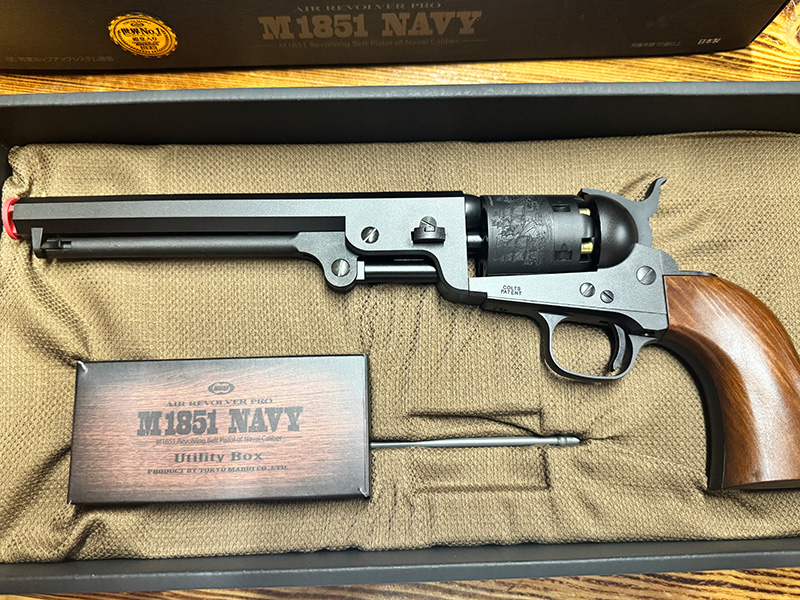
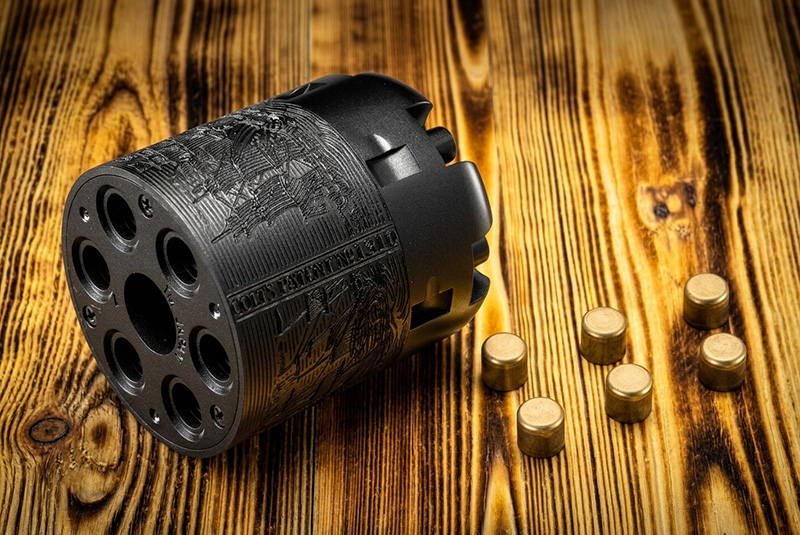
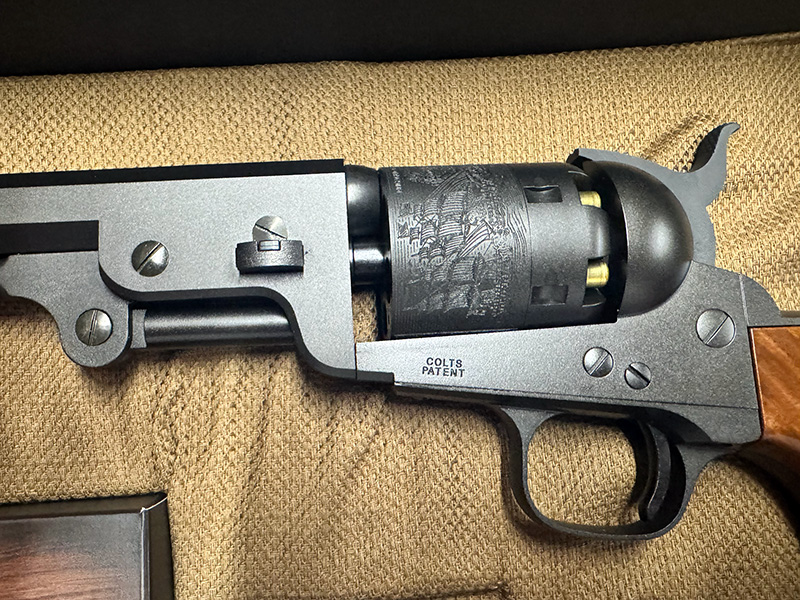
Let's start with the presentation because this is where Tokyo Marui has clearly put considerable thought. The cylinder, the rotating chamber that holds the six rounds, is engraved with a scene depicting the Battle of Campeche, which is precisely the sort of detail that nobody strictly needs but which everyone quietly appreciates. The Battle of Campeche (1843) was a decisive victory for the Texas Navy and Yucatecan forces over the Mexican fleet, marking the last time a fleet of sailing ships defeated a steam-powered naval force in battle.
This naval battle motif is faithfully reproduced via laser marking, lending the gun a sense of historical gravitas that you won't find on most spring-powered pistols. Apart from the M1851 Navy, it is also engraved in Colt Model 1860 Army and Colt Model 1861 Navy.
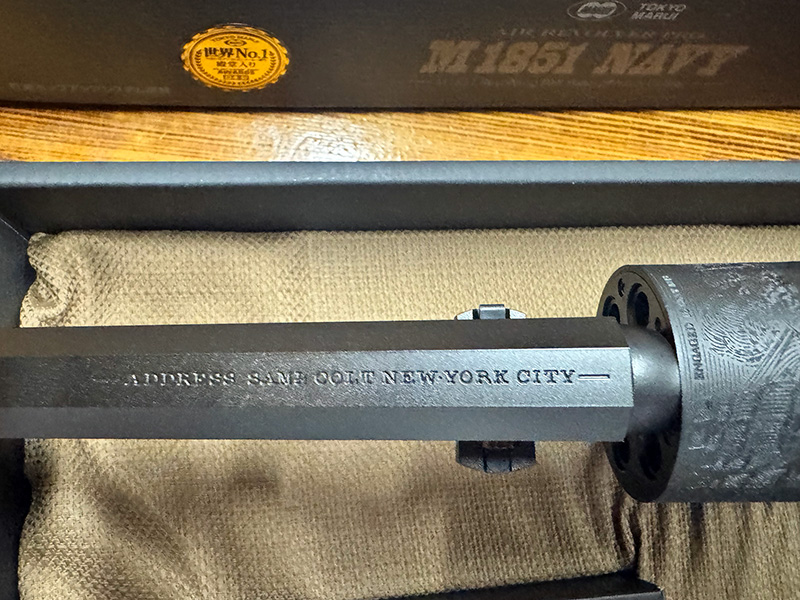
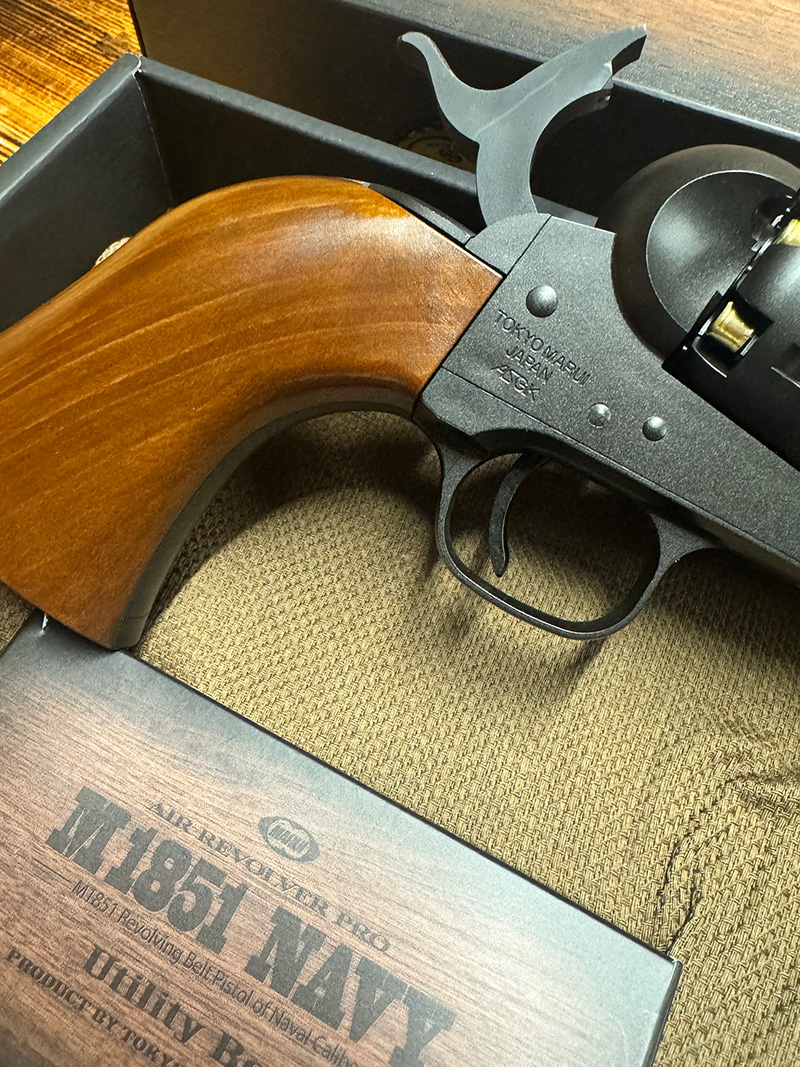
The front sight is machined from brass, the grip carries a convincing woodgrain painted finish, and the overall silhouette measures 339 mm in length with a barrel of 110 mm. At 450 grams with the percussion caps fitted, it has a satisfying heft without feeling like you're waving a brick around. The weight distribution feels credible, if not quite like the cold steel of the genuine article.
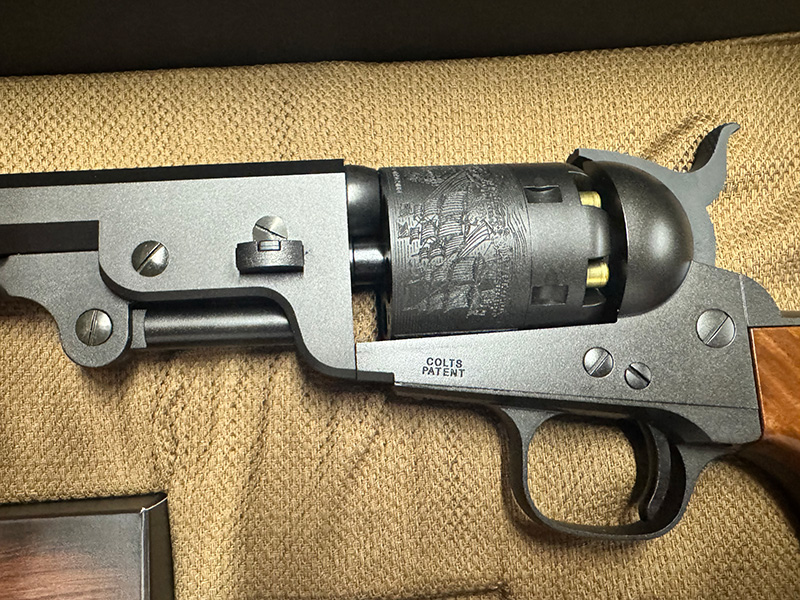
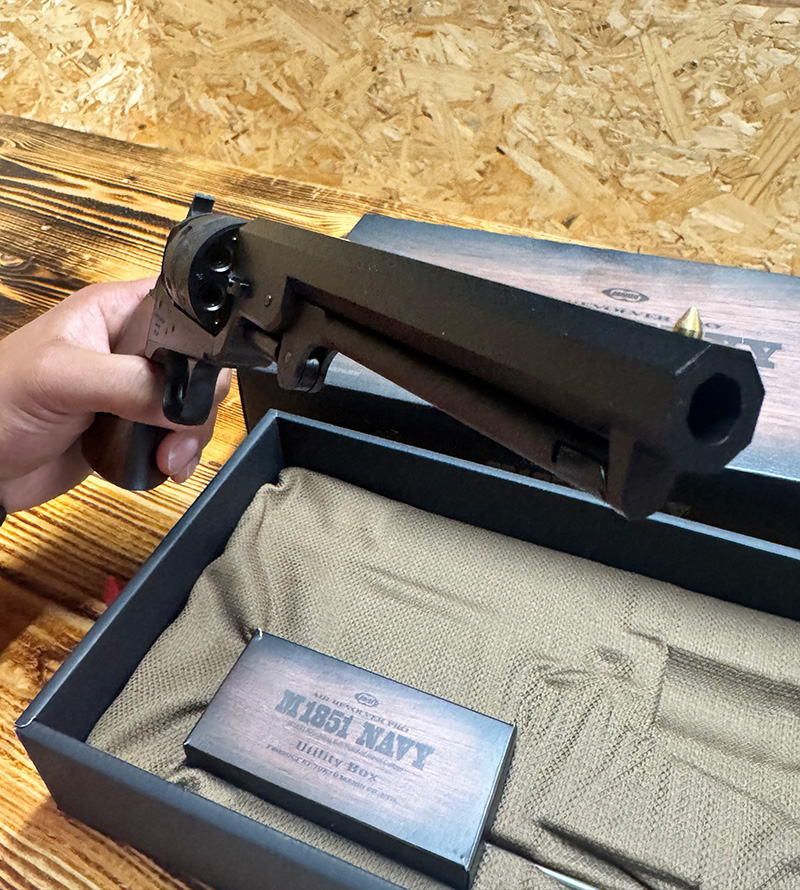
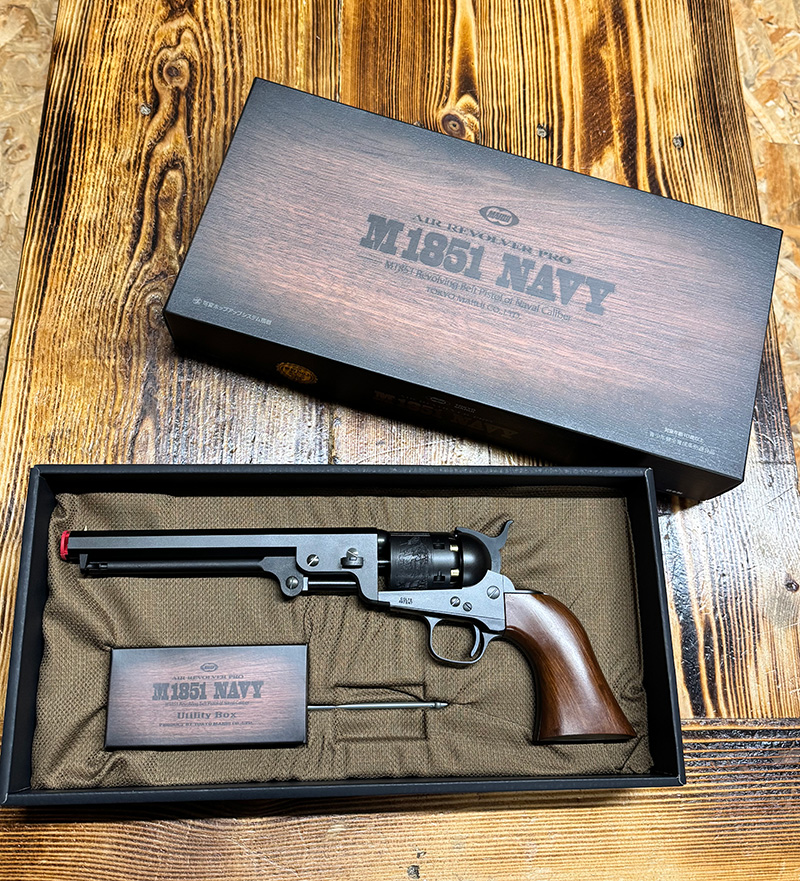
Speaking of percussion caps, included in the box are eight brass-finished replicas, six of which sit at the rear of the cylinder and two of which are spares for when, inevitably, you misplace one behind the sofa. These are purely cosmetic, mind you, but they complete the look in a way that transforms the M1851 from a nice-looking toy into something that genuinely merits a second glance. The package also includes a cleaning rod, a hop-up adjustment tool, a safety cap, the instruction manual, and 100 rounds of 0.12g BBs to get you started. This is a reasonable bundle that at least lets you have a go at once without a separate trip to the shops.
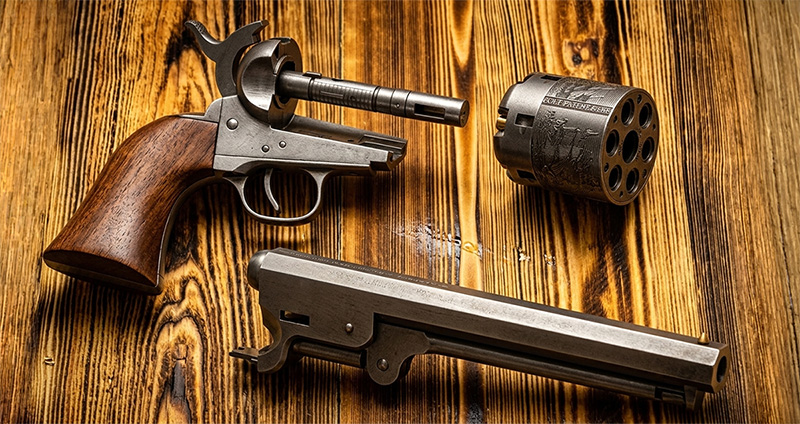
The mechanical reproduction is where this revolver earns its "Pro" designation. The loading lever, which is the pivoting arm beneath the barrel that on the original revolver was used to ram powder and ball into each chamber, is fully functional and made from metal. The cylinder itself is removable, which serves a practical purpose: because Tokyo Marui designed an entirely new internal air channel to accommodate the detachable cylinder, the mechanism delivers consistent velocity and reliable accuracy. The barrel, cylinder, and frame can all be separated just as they could on the historical original, which will delight the kind of person who enjoys reassembling things as much as using them. If that description fits you, welcome! You're among friends here.
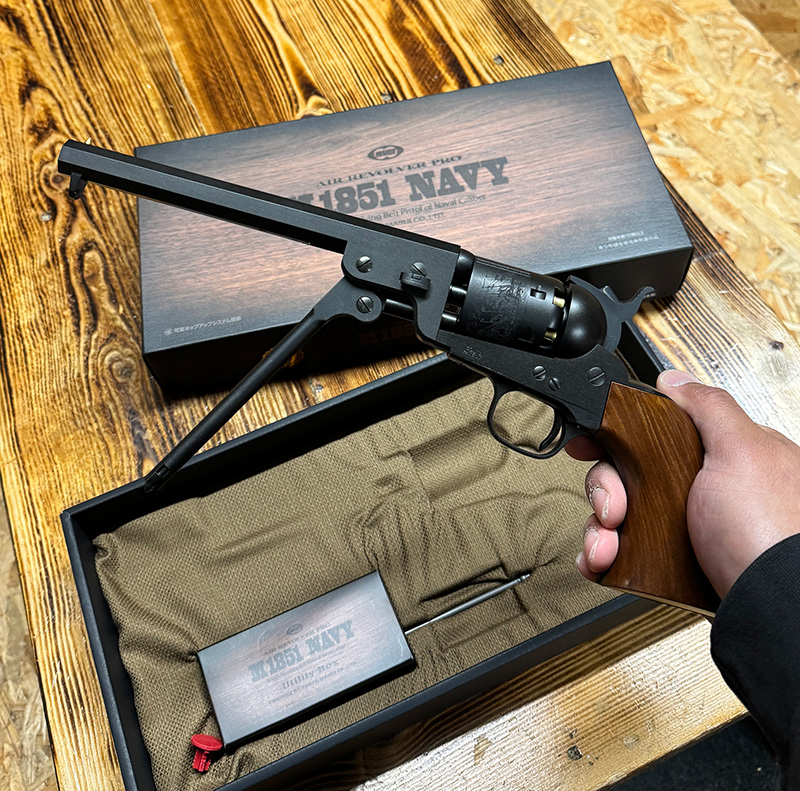
The shooting system is a single-action, air-cocking mechanism, which means two things. First, you must manually cock the external hammer before each shot as there is no gas canister, no battery, and no shortcut. You pull the hammer back, hear the satisfying click of the cylinder rotating into position, then press the trigger. Second, the absence of gas or electrical power sources means running costs are essentially nil beyond the BBs themselves. This gives the M1851 a certain purity that more modern airsoft guns lack it is a straightforward mechanical interaction between user and machine, and it never pretends to be otherwise. It also means that if you're expecting to empty six rounds in rapid succession, you'll need to adjust your expectations as well as your wrist.
Accuracy, somewhat against expectations, is genuinely decent. Tokyo Marui has fitted an adjustable hop-up system, which applies backspin to the BB as it leaves the barrel, extending range and flattening the trajectory. The hop-up is adjustable between 0.12g and 0.2g BBs using the included tool, which is a thoughtful inclusion. For casual target shooting at garden distances, the M1851 performs consistently and puts BBs more or less where you're pointing it. Muzzle velocity sits in the region of 100 to 110 feet per second, not blistering, but adequate for what this gun is designed to do, which is punch small plastic balls into cardboard targets while you imagine yourself somewhere considerably more dramatic.
The safety mechanism deserves a mention, both for practicality and for its charming design flourish. Rather than a conventional lever or button, the safety is disguised as a screw head on the frame in keeping with the period aesthetic. When the hammer is fully cocked, pressing this in locks both the trigger and hammer. It's a small detail, but it's indicative of the care taken throughout the design process. Tokyo Marui clearly decided that if something was going to be on this gun, it was going to look as though it belonged on an 1851 Navy, even if that thing is a modern safety device. This is the sort of decision that separates a considered replica from a toy with ambitions.
It would be dishonest, however, to review the M1851 without addressing its limitations, particularly for anyone approaching it as a practical airsoft sidearm rather than a collector's piece. The six-round capacity is period-accurate but distinctly inconvenient by modern standards, and the individual loading process: remove the cylinder, load each chamber in sequence, refit — is slow enough that calling for a tactical reload in the middle of a skirmish would require the patience of a saint and the goodwill of your opponents. A spare cylinder which is sold separately helps somewhat, but even swapping cylinders takes a moment's fiddling. For competitive or recreational airsoft skirmishing, this gun is not the tool for the job, and pretending otherwise would be doing you a disservice.
The build quality, while generally pleasing, is not without its compromises. The internal frame uses metal parts, which adds rigidity and eliminates the slight flex you sometimes feel when cocking cheaper spring guns. The external parts, however, are largely polymer, good polymer, finished convincingly, but polymer nonetheless. It does not feel like a steel revolver, and if that's the standard you're measuring against, you will notice the difference. What it does feel like is a carefully constructed scale replica that happens to fire BBs, which is precisely what it is. For display, handling, and occasional shooting, the construction is more than fit for purpose; for anything more demanding, you'd want to look elsewhere.
For whom, then, is the M1851 Navy a worthwhile purchase? The honest answer is a fairly specific audience: airsofters with an interest in historical firearms, hobbyists who enjoy the tactile experience of a mechanically involved shooting process, and anyone who simply wants something unusual sitting on a shelf or coffee table that can also be taken out to the garden for a quiet afternoon's plinking. It is not exactly what you’ll bring to the airsoft field, it is far too slow, too limited in capacity, and too low-powered to compete with modern replicas. In that context, rating it poorly for gameplay would be like marking down a watercolour brush because it performs badly as a screwdriver. The two things are not really in competition.
Taken on its own terms, the Tokyo Marui M1851 Navy is a well-executed, historically engaged airsoft replica that rewards the buyer who wants something out of the ordinary. The adjustable hop-up and consistent performance are genuine engineering achievements for a product in this category. The period detail from the Campeche engravings to the brass percussion caps to the operational loading lever, is handled with real care. It is not the most powerful thing on the market, nor the fastest to reload, nor the most practical for any serious purpose. What it is, however, is quietly charming, surprisingly accurate, and distinctly more interesting than yet another black polymer tactical pistol. If the 1851 Navy speaks to you, Tokyo Marui have done it justice. If it doesn't, there are plenty of other options. But none of them will make you feel quite so much like you're about to duel at dawn.
Thanks to CAMO for allowing us to use their shooting range.